
A few years ago, I started paying more attention to my breathing. It wasn’t great—especially at night when I’d wake up feeling stuffy and groggy, switching to mouth breathing throughout the evening. One simple change I tried that helped me breathe better involved resting my tongue on the roof of my mouth. I read about it in James Nestor’s book Breath: The New Science of a Lost Art only after switching to nasal breathing. Nasal breathing was much easier in comparison. Retraining tongue position with tongue exercises was difficult and took time. I continue to practice these by using the muscles in my mouth and face.
Fast forward several months. It not only helped improve my breathing but it also slowly reduced my overbite. As a result it left my jawline noticeably firmer and more pronounced. Nasal breathing has become my default both during the day and almost always at night. This has brought me sound sleep and more constant levels of energy. The great thing is, it didn’t require braces or anything more than a few tongue exercises done regularly and more awareness of my tongue position.
I’m sharing this because if a guy in his 50s like me can see and feel the difference from this small change I think you can as well. No magic here, only a small change that over time has slightly refined my jaw line, making me look stronger – younger.
In this article we will list some tongue exercises that help you breathe through your nose and give your face a better, more sharper look. Ready to give your tongue a workout? Let’s start.
Why Tongue Position Matters After 50
After 50, gravity and old habits have an effect. Breathing gets worse for most of us, switching many of us to mouth breathing over time, and most of us at night. This dries the throat, messes with our sleep, and impacts overall health.
Correct tongue posture helps prevent this. When the entire tongue rests flat against the roof of the mouth, it supports the upper jaw and keeps the airway open, making nasal breathing easier.
Many of us rest our tongues low in our mouth. That encourages mouth breathing and softens the jawline over time. Proper tongue position can reverse this. Proper oral posture may help keep facial alignment and airways open as we get older [1].
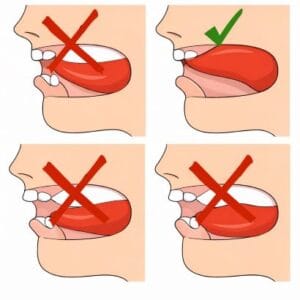
The 4 Key Tongue Exercises to Start Today
The following exercises are simple ways to train your tongue for increased strength, making it easier as you practice them to hold your tongue in the correct position. They’re daily habits with a focus on consistently improving nasal breathing. Try practicing for 5-10 minutes spread out during the day.
1. The Full-Palate Hold
This is the basic exercise for tongue positioning. It trains the whole tongue (front, middle, and that tricky back third) to stay up – to the roof of the mouth, naturally widening your airway for easier nasal breathing.
- Sit or stand tall. Close your lips gently—no clenching.
- Press the tip of your tongue flat against the roof of your mouth, just behind your front teeth.
- Slide the middle and back sections up until your entire tongue suctions lightly to the palate. You should feel a slight vacuum seal.
- Hold for 30-60 seconds, breathing through your nose. Repeat 5 times a day.
A helpful tip is to yawn wide a few times to make it easier to position the tongue. This one exercise is responsible for helping improve my daytime nasal breathing.
2. The Hard Swallow Reset
Swallowing wrong (tongue pushing forward) helps reinforce mouth breathing. This exercise fixes it while ensuring your air passageway is clear even when swallowing..
- With your tongue suctioned up (from Exercise 1), sip water or saliva.
- Swallow hard, pressing your tongue firmly into the palate—no forward thrust. Your Adam’s apple should barely move.
- Do 10 reps after meals or drinks.
Like many things we do automatically I never gave a thought to how I swallow, only learning the “correct” way while learning about tongue placement for better breathing. It definitely becomes easier the more you practice this.
3. Tongue Chewing with Gum
A great muscle workout to strengthen the tongue to hold position easily during breaths.
- Grab sugar-free gum (or a soft silicone tongue trainer if you want to level up).
- Chew slowly, focusing on pressing the gum up against the roof of your mouth with your tongue—not your teeth.
- 5 minutes, twice a day.
This strengthened my tongue fast. It is difficult initially but becomes easier the more you practice but tends to work tongue muscles you didn’t think you had (there are eight in your tongue).

Three Quick Add-Ons for Extra Airway and Jaw Support
Try out the following quick and simple exercises once you’ve got the hang on tongue placement. They improve your nasal breathing while reinforcing proper tongue positioning.
- Chin Tucks: Sit straight, gently pull your chin back like making a double chin (but hold it tight). 5 reps of 5 seconds. This is great for aligning your head over your spine and easing air flow.
- Thumb Resistance Push: Place your thumb under your chin. Press your jaw down against it while keeping your tongue suctioned. Hold 10 seconds, 3 times. Builds that under-chin firmness and tongue strength.
- Palate Humming: Hum a low tune with tongue up—feel the vibration lift your soft palate. 1 minute daily. It heightens awareness, increases nitric oxide which opens airway, and reinforces nasal breathing.
These exercises help tongue position while also strengthening neck muscles. They also help with clearing nighttime congestion.
Your 30-Day Starter Plan
Don’t become overwhelmed and keep in mind the goal of ensuring proper tongue positioning, for better breathing. It will really pay off while sleeping when most of us revert to mouth breathing.. Here’s a suggested plan:
- Week 1: Focus on the Suction Hold. Check posture hourly (set a gentle alarm) and note your nasal ease on a 1-10 scale.
- Week 2: Add Hard Swallows after every drink. Toss in 5 minutes of gum chewing post-dinner to build staying power.
- Week 3: Introduce Nighttime Tape + Anchor 3 nights. Track sleep stuffiness.
- Week 4: Full routine. Review your “before” photo—any subtle shifts in breathing or jaw?
Of course there is no need to make this so formal – you can practice these exercises as you think about it (as I did). By doing this on a schedule, however, you will reinforce the habit and strengthen your tongue muscles for proper placement much more quickly.
Realistic Expectations for Men Over 50
As I always suggest – start small and be patient. From my experience and practice
- Breathing improves first—better breathing begins in 2-4 weeks for most, This includes less dry mouth and reduced snoring.
- Facial changes with jawline becoming more pronounced or less rounded around 7 to 9 months with daily practice.
- Bigger changes, like bite adjustments, can take longer and depend on your starting point.
Not everyone sees dramatic overbite fixes – even changes in my overbite aren’t 100% but the nasal breathing and energy improvements become noticeable much more quickly. Listen to your body—if something doesn’t feel right, ease off and talk with a doctor.
Conclusion: Tongue Exercises to Look Younger and Breath Better
You’ve got the tools now to improve your breathing and possibly alter your jawline as a result. Like any change, results won’t appear immediately. The younger you are when you start, the more prominent the changes will appear. If you are doing this to improve your breathing – talk with a medical professional to discuss how this may make a physical difference.
Try it out – snap that Day 1 photo, try the Suction Hold tonight, and commit to the 30-day plan—nose-first all the way. In a month, you’ll likely breathe easier and catch a sharper edge to your jawline in the mirror.
Check out Better Breathing Benefits or Breathing for Better Health.
…
The Content is not intended to be a substitute for professional medical advice, diagnosis, or treatment. Therefore always seek the support and guidance of your physician when you are unsure about any health issues.